



On March 13, 2026, Class DE1 and D2 of Rooms Management from FHTM led by Dr. Salott Chau, have visited Tai O Heritage Hotel in Hong Kong SAR a Grade II historic building revitalized from the Old Tai O Police Station, built in 1902. Carrying memories of pirate invasions and war years, this distinctive hotel, with only 9 guest rooms in a rare compact layout, has pioneered a unique model that integrates historical fabric with modern hospitality services.
After gathering at Hong Kong Port of the Hong Kong-Zhuhai-Macao Bridge, the whole tour took a bus to Tai O. Upon arriving in Tai O, we first had lunch at Hoi Wun Vegetarian Restaurant. The interior was decorated with strong water village elements: bamboo ornaments, fishing-themed murals, and stilt-house views outside the window complemented each other, creating an authentic fishing village atmosphere. Students enjoyed light yet flavorful local vegetarian dishes. After lunch, they took a small boat to explore Tai O’s waterways and experience its distinctive scenery known as the “Venice of Hong Kong”. After the boat tour, we disembarked and headed to Tai O Heritage Hotel. From the pier, we walked slowly uphill along a path built against the hillside. After about five minutes, a white colonial-style building came into sight — the century-old Tai O Heritage Hotel. According to the manager, the main building was constructed in 1902, originally serving as military quarters and the core office of the police station.
The manager highlighted that the reception area was once the report room, and two adjacent rooms. Each cell was only about two to three square meters, yet once held up to 10 people during the police station era, showing extremely cramped conditions. Accompanied by the manager, students visited one suite. The hotel has only 9 rooms, yet each carries unique historical stories and preserves key architectural features of the old police station. The guide emphasized the British colonial-style fireplaces in the rooms: upgraded for safety, they can be used by guests during certain periods, becoming a highlight of historical immersion. On the upper part of the hotel, we visited the cylindrical “Mosquito House”, a key defensive structure of the old police station. It originally served for surveillance and as a place to discipline military offenders. Today, it is fully preserved and open to visitors.
Tai O Heritage Hotel strategically leverages its scarcity and centers its brand on century-long police history, avoiding direct competition with large hotels. From an academic perspective, this trip integrated theory and practice. This historic hotel protects heritage with respect and activates value through innovation, offering a highly valuable model for heritage revitalization and hotel room operation. Students can gain insights from this educational tour and further explore the integration of historic building revitalization and hospitality management.
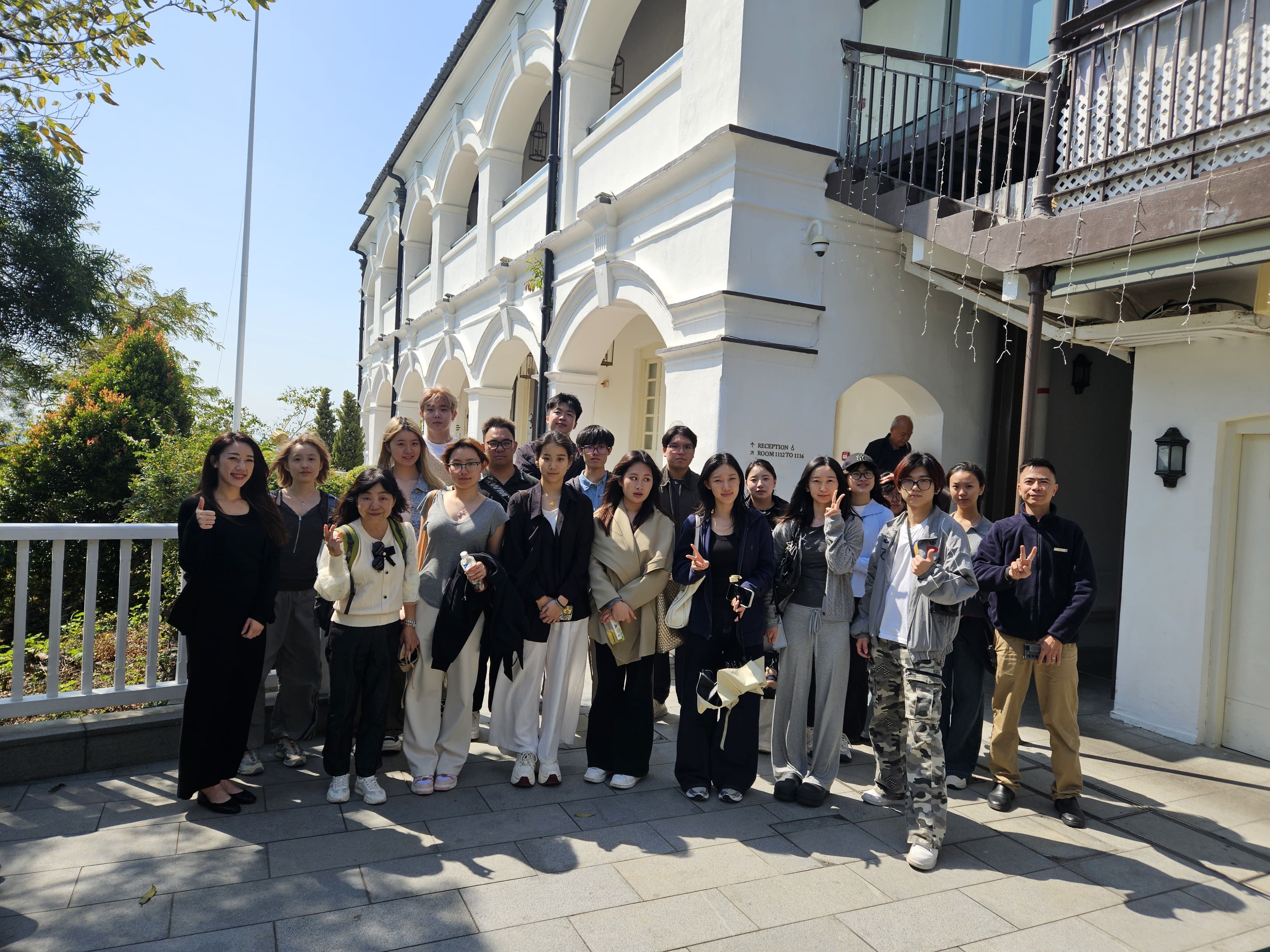
The Group Photo

